
Unique Stones
A modern jewelry e-commerce website for a Lebanon-based brand, presenting distinctive gold and silver collections through an elegant, image-focused shopping experience.
Explore resourceHijab and modest fashion
A bilingual OpenCart e-commerce website for a Lebanese hijab and modest-fashion brand, featuring a visually focused storefront, structured scarf and accessory collections, product variations, cart and checkout flows, customer accounts, and admin-managed store operations.
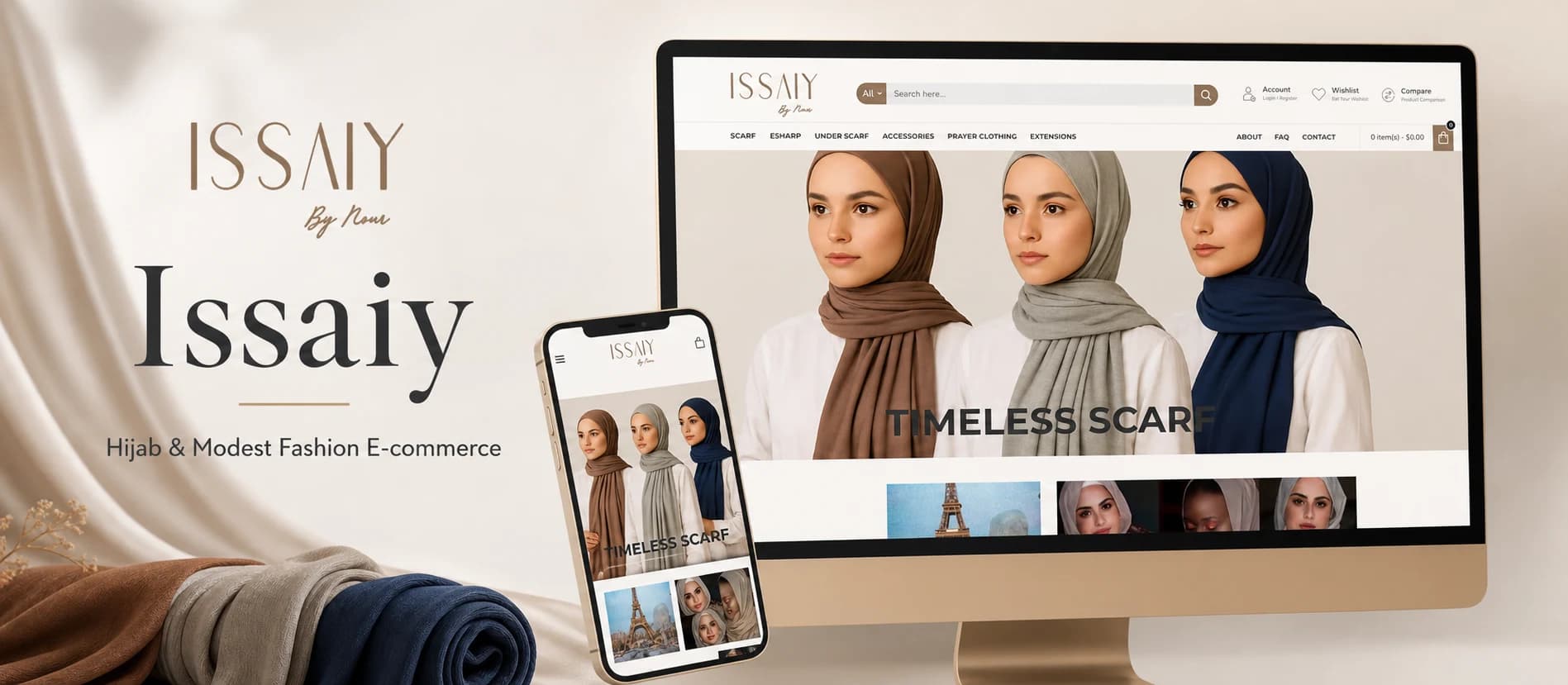
Issaiy needed a professional digital storefront that could reflect its modest-fashion identity while supporting a growing catalog of hijabs, scarves, under-scarves, prayer clothing, accessories, pins, collars, and gift products. The experience had to serve Arabic- and English-speaking customers, make it easy to browse by fabric, style, color, and product type, and give the business practical tools for managing products, promotions, stock, orders, returns, customers, content, and communication channels.
CloudGoUp delivered the e-commerce solution using OpenCart, PHP, MySQL/MariaDB, Journal 3, HTML, CSS, JavaScript, responsive web design, multilingual content management, WhatsApp integration, and social-media integrations. The implementation covered storefront planning, responsive development, product and category structure, Arabic and English configuration, shopping cart and checkout functionality, customer account tools, order management, administrative dashboard setup, mobile optimization, deployment, and production configuration.
CloudGoUp treats each case study as a connected system rather than an isolated interface. The planning work covers user journeys, content structure, technical architecture, measurement, performance, and operational handoff so the project can support future growth instead of becoming difficult to maintain after launch.
The same approach can be adapted for new builds, redesigns, audits, migrations, analytics improvements, and staged roadmaps where the business needs progress without losing control of quality or scope.
The experience should clarify who uses the system, what they need to do first, and which decisions must feel obvious.
Content, data, integrations, admin workflows, analytics, and performance requirements should be planned before interface polish.
QA, SEO, accessibility, events, redirects, security basics, and operational ownership reduce risk when the project goes live.
Planning questions
More case studies
Explore connected projects with similar industries, delivery models, or technical needs.
A modern jewelry e-commerce website for a Lebanon-based brand, presenting distinctive gold and silver collections through an elegant, image-focused shopping experience.
Explore resourceA modern corporate and B2B product-catalog website for a family-owned international trading group with dedicated MasterFeed and Commercial Network subsidiary experiences.
Explore resourceA modern OpenCart and Journal 3 e-commerce website for a premium fashion brand specializing in luxury men’s and women’s shirts in Tunisia.
Explore resource