CloudGoUp

Grocery and snack delivery

Tabiaat Group

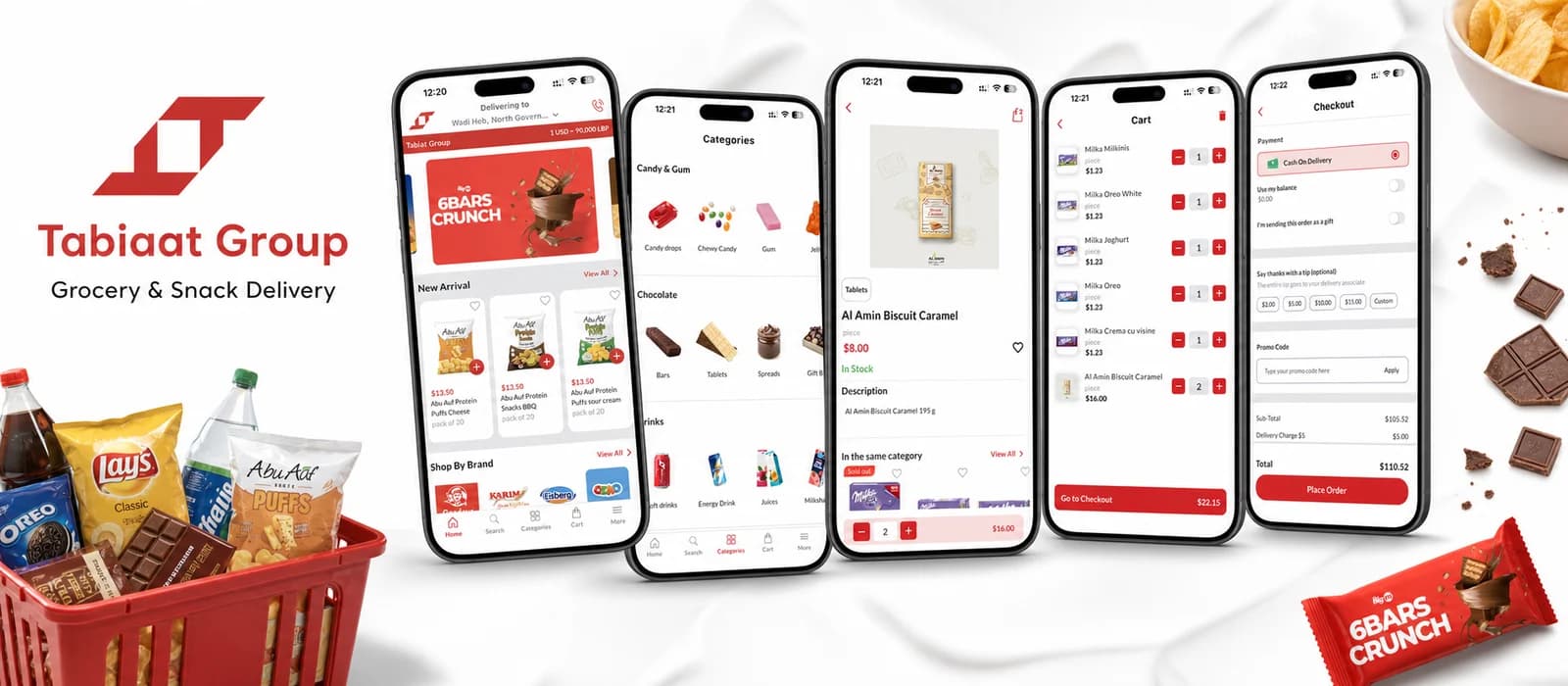
A cross-platform grocery and snack delivery mobile application for Android and iOS, customized from CloudGoUp's white-label grocery e-commerce platform with product discovery, promotions, delivery scheduling, order tracking, order history, reordering, and customer support.

Services involved

FlutterDartPHPOpenCartMySQL/MariaDBREST APIsPush NotificationsAndroidiOSResponsive Admin DashboardPayment IntegrationsDelivery IntegrationsWhite-Label Platform
Tabiaat Group project preview

Challenge

Tabiaat Group needed a complete branded grocery and snack-shopping experience that could support a broad catalog of snacks, groceries, beverages, household essentials, and specialty products while keeping ordering fast on mobile. The solution needed customer registration, secure login, product categories, search, promotions, checkout, delivery scheduling, order tracking, payment options, push notifications, reordering, support flows, and an operations dashboard that could manage catalog and order changes without requiring frequent app releases.

Solution

CloudGoUp customized its white-label grocery e-commerce platform for Tabiaat Group using Flutter, Dart, PHP, OpenCart, MySQL/MariaDB, REST APIs, push notifications, Android, iOS, a responsive administration dashboard, and third-party payment and delivery integrations. The implementation adapted the brand identity, logo, colors, product catalog, category structure, pricing and promotional rules, payment methods, delivery zones, delivery fees, schedules, notifications, store policies, Android listing, and iOS listing while preserving a reusable technical foundation for grocery and snack delivery operations.

Outcomes

  • Launched a branded Android and iOS grocery and snack delivery application for Tabiaat Group
  • Adapted CloudGoUp's reusable white-label grocery platform into a retailer-specific mobile commerce experience
  • Connected product discovery, promotions, cart, checkout, delivery address selection, payment, and order-management flows
  • Supported daily operations through a centralized dashboard for products, categories, stock, pricing, orders, delivery areas, schedules, banners, push notifications, customer enquiries, and reporting
  • Published the app on Google Play and the App Store, with the Google Play listing showing 5K+ downloads

Features planned

  • Native-like Android and iOS mobile experience
  • Customer registration and secure login
  • Product categories and subcategories
  • Product search and advanced filtering
  • Product images, descriptions, prices, and availability
  • Product options and quantity selection
  • Featured products and personalized recommendations
  • Promotional offers and discounted products
  • Shopping cart and streamlined checkout
  • Multiple payment-method support
  • Delivery-address management
  • Delivery date and time-slot selection
  • Same-day and scheduled delivery support
  • Real-time order-status tracking
  • Push notifications for order updates and promotions
  • Customer order history
  • Quick reordering from previous purchases
  • Favorites and saved products
  • Loyalty rewards and exclusive offers
  • Customer support and direct communication
  • Mobile-friendly account and profile management
  • Centralized web-based administration dashboard
  • Integrated grocery e-commerce backend and API
  • iPhone and iPad support

Implementation approach

CloudGoUp treats each case study as a connected system rather than an isolated interface. The planning work covers user journeys, content structure, technical architecture, measurement, performance, and operational handoff so the project can support future growth instead of becoming difficult to maintain after launch.

The same approach can be adapted for new builds, redesigns, audits, migrations, analytics improvements, and staged roadmaps where the business needs progress without losing control of quality or scope.

User journey

The experience should clarify who uses the system, what they need to do first, and which decisions must feel obvious.

Technical structure

Content, data, integrations, admin workflows, analytics, and performance requirements should be planned before interface polish.

Launch readiness

QA, SEO, accessibility, events, redirects, security basics, and operational ownership reduce risk when the project goes live.

Planning questions

What this kind of project needs before implementation

  • Which user journey needs to be easiest on the first release?
  • What data, integrations, and admin controls are required behind the interface?
  • Which analytics events prove that the product is creating useful business activity?
  • What should be built now, and what should stay in the roadmap until the first version proves value?