Construction and structural services
St George Investments Website & CMS
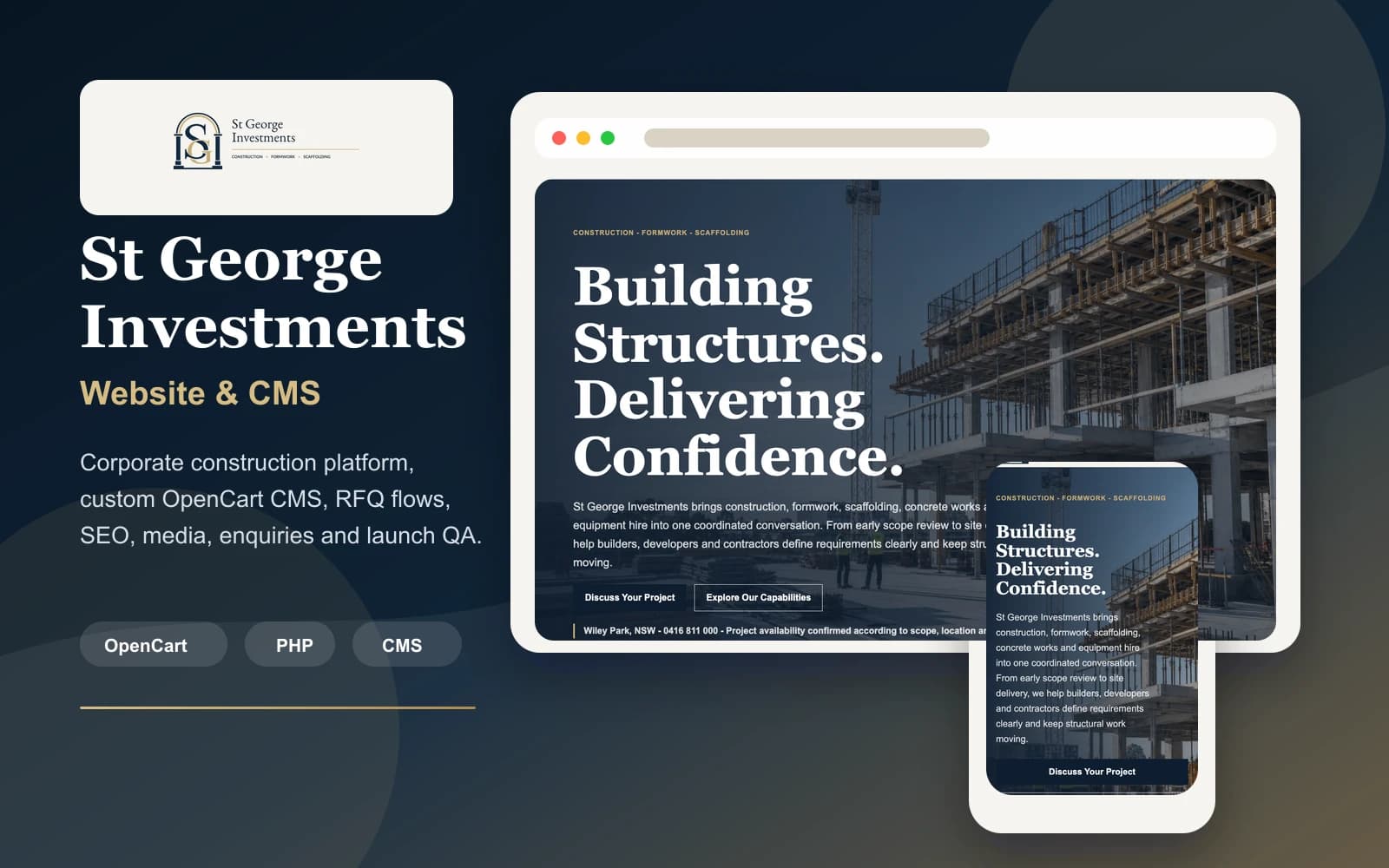
A responsive corporate website and custom OpenCart-powered CMS for an Australian construction and structural-services company, built around lead generation, service content, equipment quote lists, dynamic enquiries, SEO, and launch-ready administration workflows.
Services involved

Challenge
St George Investments needed a professional digital platform that could communicate its construction, formwork, scaffolding, concrete works, equipment hire, and project coordination capabilities while giving the team control over content and incoming enquiries. The project also required transforming OpenCart 3.0.5.0 from an e-commerce system into a tailored lead-generation CMS with secure administration tools, clean URLs, technical SEO, private document uploads, quote-list workflows, and mobile-first UX.
Solution
CloudGoUp designed and developed the platform end to end using OpenCart 3.0.5.0, PHP 8.2, MariaDB/MySQL, Twig, HTML5, CSS3, vanilla JavaScript, Apache/XAMPP, custom database migrations, custom CMS modules, XML sitemap support, structured SEO metadata, Google Maps integration, Git-based version control, and automated QA tooling. The build includes services, industries, projects, equipment, FAQs, website pages, media, enquiries, RFQ workflows, multi-step forms, email notifications, accessibility improvements, brand-asset integration, release packaging, and deployment preparation.

Outcomes
- Delivered a release-candidate corporate website and custom CMS prepared for production configuration and launch
- Transformed OpenCart from an e-commerce foundation into a lead-generation content platform for construction and structural services
- Enabled the client to manage services, industries, projects, equipment, FAQs, pages, media, enquiries, and website content from a secure administration portal
- Implemented equipment quote-list workflows, dynamic multi-step forms, private document uploads, enquiry tracking, and email notifications
- Prepared clean URLs, XML sitemap support, structured SEO metadata, accessibility improvements, responsive UI, automated QA, release packaging, and deployment readiness
Features planned
- Responsive corporate website
- Custom OpenCart CMS transformation
- Lead-generation platform architecture
- Secure administration portal
- Services management
- Industries management
- Projects management
- Equipment management
- FAQ management
- Website page management
- Media management
- Enquiry tracking
- Equipment quote-list workflow
- Dynamic multi-step forms
- Private document uploads
- Email notifications
- Clean URLs
- Technical SEO
- XML sitemap
- Structured metadata
- Accessibility improvements
- Mobile-first interface
- Construction service content
- Formwork service content
- Scaffolding service content
- Concrete works content
- Equipment hire content
- Project coordination content
- Google Maps integration
- Custom database migrations
- Brand asset integration
- Release packaging and deployment preparation
Implementation approach
CloudGoUp treats each case study as a connected system rather than an isolated interface. The planning work covers user journeys, content structure, technical architecture, measurement, performance, and operational handoff so the project can support future growth instead of becoming difficult to maintain after launch.
The same approach can be adapted for new builds, redesigns, audits, migrations, analytics improvements, and staged roadmaps where the business needs progress without losing control of quality or scope.
User journey
The experience should clarify who uses the system, what they need to do first, and which decisions must feel obvious.
Technical structure
Content, data, integrations, admin workflows, analytics, and performance requirements should be planned before interface polish.
Launch readiness
QA, SEO, accessibility, events, redirects, security basics, and operational ownership reduce risk when the project goes live.
Planning questions
What this kind of project needs before implementation
- Which user journey needs to be easiest on the first release?
- What data, integrations, and admin controls are required behind the interface?
- Which analytics events prove that the product is creating useful business activity?
- What should be built now, and what should stay in the roadmap until the first version proves value?